BPC-157 in 2026: Identity, Salt Forms, Stability and Regulatory Status
BPC-157 for researchers: sequence, free base vs. acetate, stability, what FDA's 2026 review found, and where the July PCAC vote leaves it.
- Reviewed by
- Zorva Lab Research Team
- Published
- Updated
BPC-157 is one of the most-searched research peptides, and 2026 has been its busiest regulatory year. This reference pulls together what's documented about its identity, salt forms and handling, and where it stands with regulators. Most of it comes from FDA's evaluation prepared for the July 2026 advisory committee meeting.
Regulatory snapshot: this article describes the record through late September 2026, as supplied for the October 13 publication date. Advisory recommendations are not FDA approval; consult the current FDA record before relying on any compounding status.
What is BPC-157?
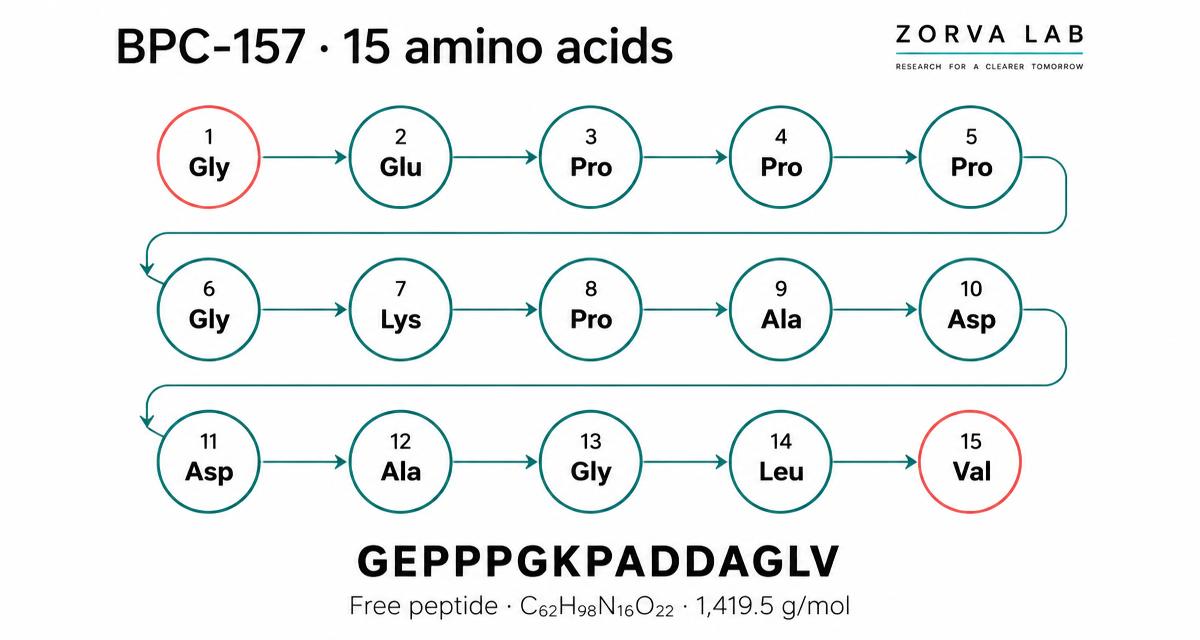
BPC-157 is a 15-amino-acid peptide described as a fragment of a larger "body protection compound" reported in human gastric juice. Researchers at the University of Zagreb first synthesized it in the early 1990s, and it was first described in the literature in 1993 (FDA, 2026).
| Property | Value |
|---|---|
| Sequence | H-Gly-Glu-Pro-Pro-Pro-Gly-Lys-Pro-Ala-Asp-Asp-Ala-Gly-Leu-Val-OH |
| One-letter code | GEPPPGKPADDAGLV |
| Molecular formula (free base) | C62H98N16O22 |
| Average molecular weight | 1,419.5 g/mol |
| Monoisotopic mass | 1,418.7 Da |
| CAS number | 137525-51-0 (free base); 216441-37-1 (acetate) |
| FDA UNII | 8ED8NXK95P (free base); PAR2FC72XP (acetate) |
| Other names | Bepecin, PL 14736 |
| Appearance | White to off-white lyophilized powder |
| Reported solubility | Water, 5 mg/mL |
Free base vs. acetate: why the salt form matters
They share the same active peptide but are different chemical substances. A free base and its salts can differ in solubility, stability and other properties, so FDA evaluated BPC-157 free base and BPC-157 acetate as two separate bulk drug substances (FDA, 2026).
Naming is a real problem. FDA found multiple salts and derivatives sold under the one common name "BPC-157." In both nominations it reviewed, the paperwork mixed identifiers: the CAS number and formula matched the free base, while the attached COA was for the acetate. You'll also see other salt forms marketed, such as arginine salts.
- The COA should name the salt form, and its CAS number and formula should match that form.
- Salt form changes how much peptide is in each milligram of powder. In an idealized dry-salt calculation assuming two counterions, BPC-157 is about 86% peptide by weight as a TFA salt and about 92% as an acetate. Actual content depends on counterion stoichiometry and moisture; see Net Peptide Content vs. HPLC Purity.
How stable is BPC-157?
FDA's review cites reports that lyophilized BPC-157 is stable at room temperature for about three weeks, with long-term storage recommended desiccated below −18 °C. Reconstituted, reported stability is two to three weeks at 4 °C and three to four months at −20 °C (FDA, 2026). These are literature-reported conditions, not a validated shelf-life specification for every lot or solution.
FDA adds that peptides like BPC-157 can be sensitive to pH, heat, concentration and impurities, which can drive aggregation and degradation. Resistance to gastric juice in vitro isn't resistance to enzymes in general: animal pharmacokinetic studies reported a plasma half-life of 5.3 to 15.2 minutes, likely because of peptidases. For storage practice, see Lyophilized Peptide Storage and Handling for Labs.
How is BPC-157 made, and which impurities should a COA address?
By Fmoc solid-phase peptide synthesis. FDA describes the 1993 route: amino acids coupled one at a time on a resin, the chain cleaved with a TFA-based mixture, and the crude peptide purified by HPLC to over 95% (FDA, 2026). FDA lists the impurities typical of this process:
- Peptide-related impurities from incomplete couplings, truncations and side reactions
- Impurities carried over from protected amino acid starting materials, such as isomers
- Residual solvents, coupling reagents and scavengers
- Peptide aggregates
Most BPC-157 COAs FDA located reported only a purity number, with no identified impurities, aggregate testing, bioburden or endotoxin results. A thorough COA covers:
- HPLC purity, with the chromatogram
- Mass-spec identity: [M+H]⁺ near m/z 1,419.7 or [M+2H]²⁺ near 710.4 (monoisotopic); see HPLC vs. Mass Spectrometry
- Salt form, and content as net peptide content or mg per vial
- Endotoxin result
- Lot number and test date that match the vial
What does the published research cover?
Mostly preclinical work: rodent and cell-culture studies, many from the originating Zagreb group. FDA's review identified five small human studies of 2 to about 26 people each, no large controlled trials, and one registered phase 1 trial (NCT02637284) with no posted results in the reviewed record. FDA also noted that BPC-157's molecular targets haven't been identified, and it raised concerns about impurities, aggregation and immunogenicity (FDA, 2026). This limited evidence does not establish safety or efficacy for human use.
What was BPC-157's FDA status in 2026?
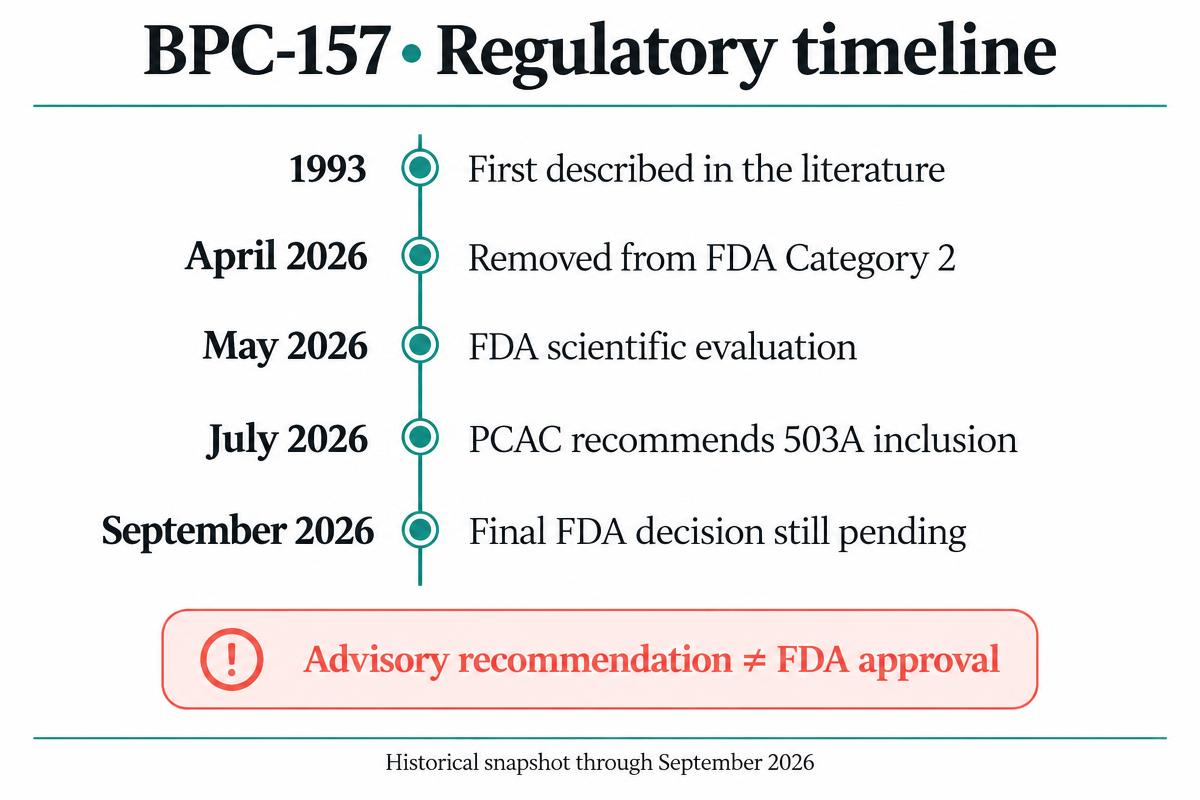
In the supplied September 2026 snapshot, BPC-157 had been removed from FDA's Category 2 compounding list in April. FDA's May evaluation advised against inclusion on the 503A bulks list; the July Pharmacy Compounding Advisory Committee (PCAC) nevertheless voted 8–6 to recommend inclusion. FDA had not made a final decision as of late September. Removal from Category 2, an advisory vote and approval of a drug are different regulatory events.
BPC-157 is not an approved drug in any country in the reviewed record. The World Anti-Doping Agency lists it under S0, non-approved substances. Laboratory catalog availability does not change that status.
Where can researchers review Zorva Lab's lot documentation?
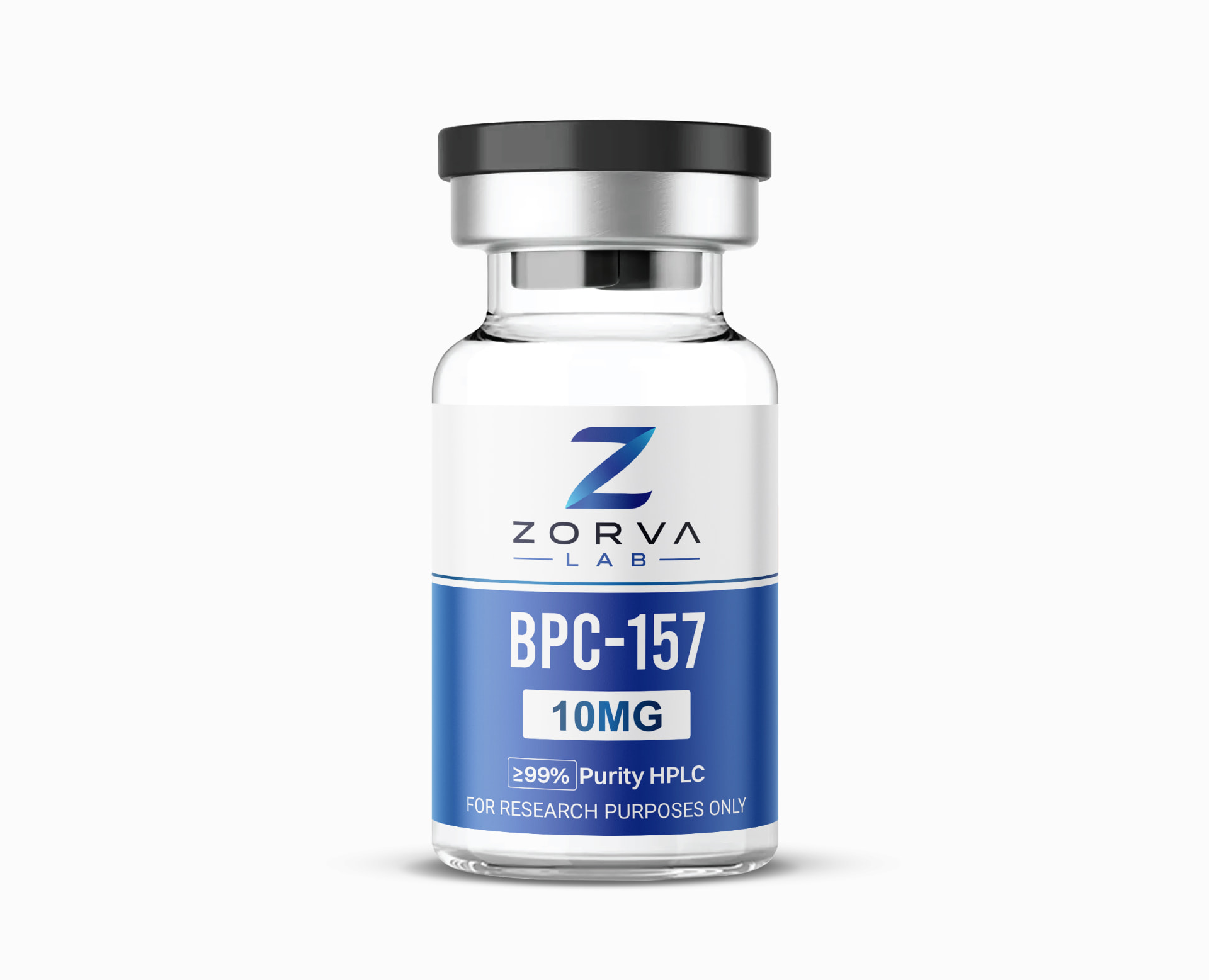
Review the actual lot report in the COA Library rather than assuming a purity value establishes salt form, net peptide content, endotoxin status or stability. Catalog entries are available for BPC-157, KLOW Blend and Glow; verify each material's composition and reported tests against your laboratory requirements.
References
- FDA. Briefing document for the July 23–24, 2026 Pharmacy Compounding Advisory Committee meeting; BPC-157 free base and acetate evaluation.
- FDA. July 23–24, 2026 PCAC meeting information and materials.
- FDA. Bulk drug substances nominated for compounding under section 503A.
- FDA. Bulk drug substances used in compounding under section 503A.
- ClinicalTrials.gov. NCT02637284.
- World Anti-Doping Agency. The Prohibited List, S0 non-approved substances.
For research use only. Zorva Lab supplies materials for in-vitro laboratory research, not for human or veterinary use. This article does not provide dosing, treatment recommendations or medical advice.
Verify it yourself
Every Zorva Lab lot has its HPLC and mass spec results published before you order.
Browse the COA library →Related compounds
More research guides
- How to Read a Certificate of Analysis (COA)
- HPLC vs. Mass Spectrometry: What Each Test Confirms
- Lyophilized Peptide Storage and Handling for Labs
- GLP-1, "GLP-2" and "GLP-3": Semaglutide, Tirzepatide and Retatrutide Compared at the Molecular Level
- Net Peptide Content vs. HPLC Purity: Why a 10 mg Vial Isn't 10 mg of Peptide
All Zorva Lab products are sold strictly for laboratory research use only. Not for human or veterinary use. This guide is educational and describes laboratory practice only.